The History of Thanksgiving Stuffing (Plus My Personal stuffing story)
Tiny Cottage Kitchen may earn money or products from the companies or product links mentioned in this post. This supports continued free recipes for you to enjoy.
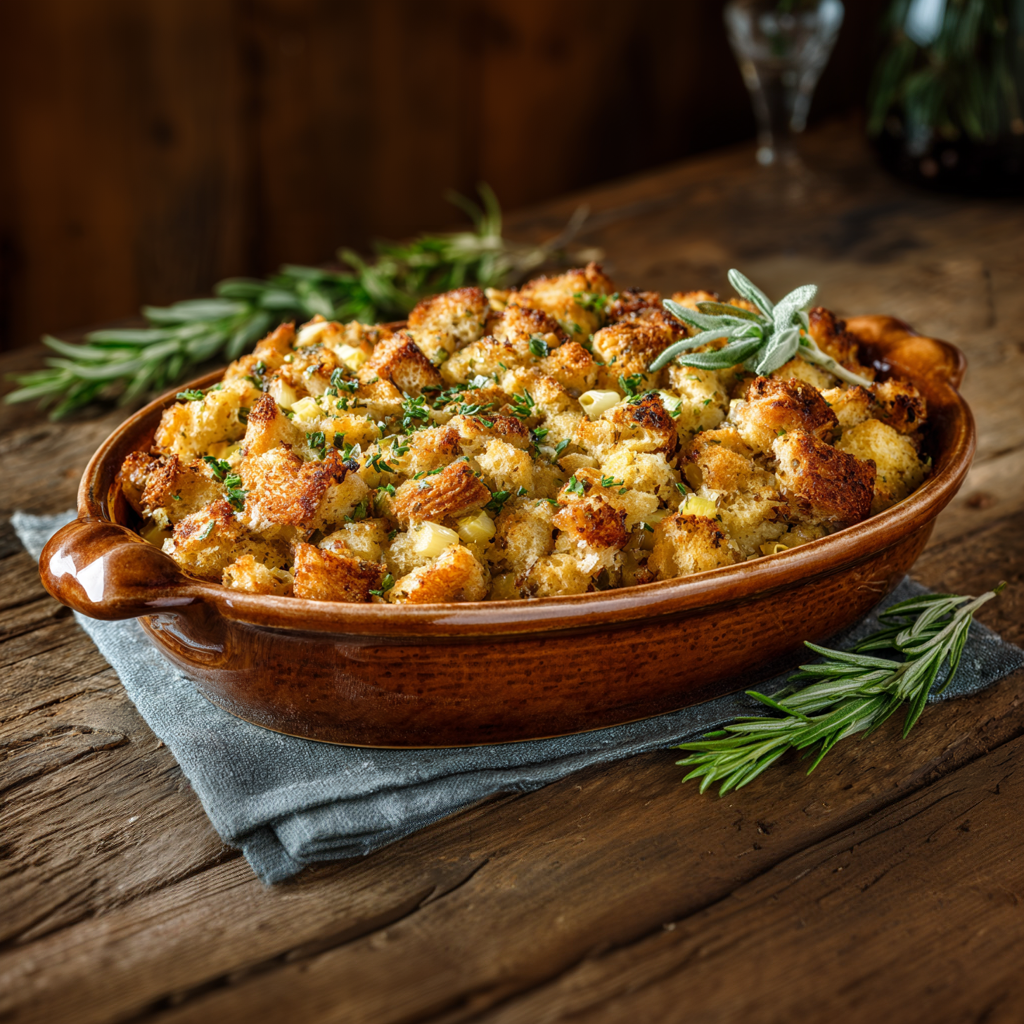
Thanksgiving wouldn’t feel complete without a warm dish of stuffing on the table. Whether you call it stuffing or dressing, this comforting side dish carries centuries of culinary history — and for many families, cherished memories too. In today’s post, we’re diving into the surprising origins of stuffing, how it evolved into an American holiday staple, and I’ll share the exact family recipe featured in my video below.
Scroll down to watch the video.
A Brief History of Thanksgiving Stuffing
Stuffing dates back thousands of years — farther than most of our Thanksgiving traditions.
Ancient Origins
The earliest written record of stuffing comes from Apicius, a 1st-century Roman cookbook. Romans stuffed everything: chicken, pig, dormice — even squid — with mixtures of herbs, vegetables, and grains.
Stuffing Arrives in Early America
Early American colonists carried English and European stuffing traditions with them. In England, stuffing frequently included:
- stale bread
- onions
- herbs
- dried fruit
- rich fats like suet or butter
As colonists encountered new ingredients in North America, their recipes changed.
Cornbread, oysters, wild herbs, and seasonal vegetables all found their way into regional stuffings, creating the variations we know today:
New England oyster stuffing, Southern cornbread dressing, Pennsylvania Dutch potato stuffing, and more.
Why We Serve Stuffing on Thanksgiving
By the mid-1800s, stuffing was firmly tied to Thanksgiving thanks to:
- Sarah Josepha Hale’s Thanksgiving campaign to president Lincoln
- 19th-century cookbooks featuring stuffed turkey as the star of the holiday table
Stuffing has persisted through wars, rations, and changing tastes because it is:
- economical
- customizable
- comforting
- a delicious way to use stale bread
Today, every family seems to have “the one true stuffing” and they vary by region and of course, family traditions and personal preferences.
You may like these other posts:
How one food changed the way America eats